Skip to content

// SERVICES

Every curve is unique. Every fit must be perfect.

Yacht refit projects leave no room for error. From complex curved glazing to structural components and bespoke assemblies, we reverse engineer or develop parts from scratch, deliver complete production documentation, and ensure the part fits first at first installation so the project stays on schedule.

Data, Fit for Installation

Glazing-2

We work alongside glazing manufacturers and shipyards and develop production-ready CAD data to produce or reproduce shaped, curved, double curved and segmented glazing elements in yacht refits.

In Refit projects, every geometry is unique. Reflection and Continuity matter. Our role is to ensure that what is needed can be manufactured, fits perfectly at first installation and performs reliably when in use. 

Partners in the Process

From initial geometry capture to final production data, we work as part of the project team: We align design, manufacturing, and installation requirements - ensuring that decisions made early hold up in reality.

We are not a handover point - we stay involved until the result works.

Complex Curved Geometry - First-Time Fit and Reliable Performance in Use

Curved glazing in yacht refits often involves complex and segmented geometries, transitions and tight interfaces. Ensuring correct fit across all panels is critical - not only for visual continuity, but for structural integrity, load transfer and long-term durability in service.

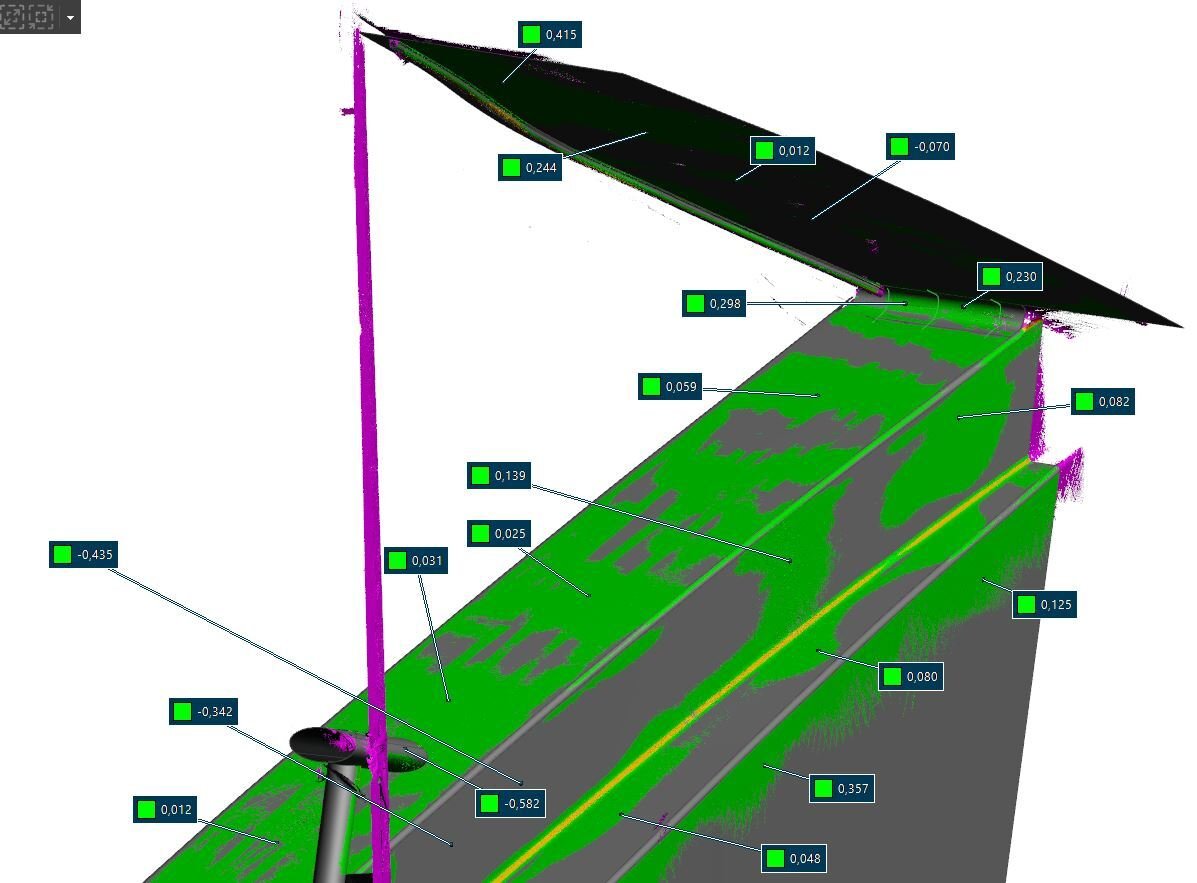
We use high-precision geometry capture and advanced engineering methods to translate the existing structure into production-ready data.

But geometry alone is not enough: We define how the component must perform in its real operating environment - considering materials, loads, interfaces and installation constraints as a complete system - ensuring every component is right first time, on time, and never becomes a risk to your project.

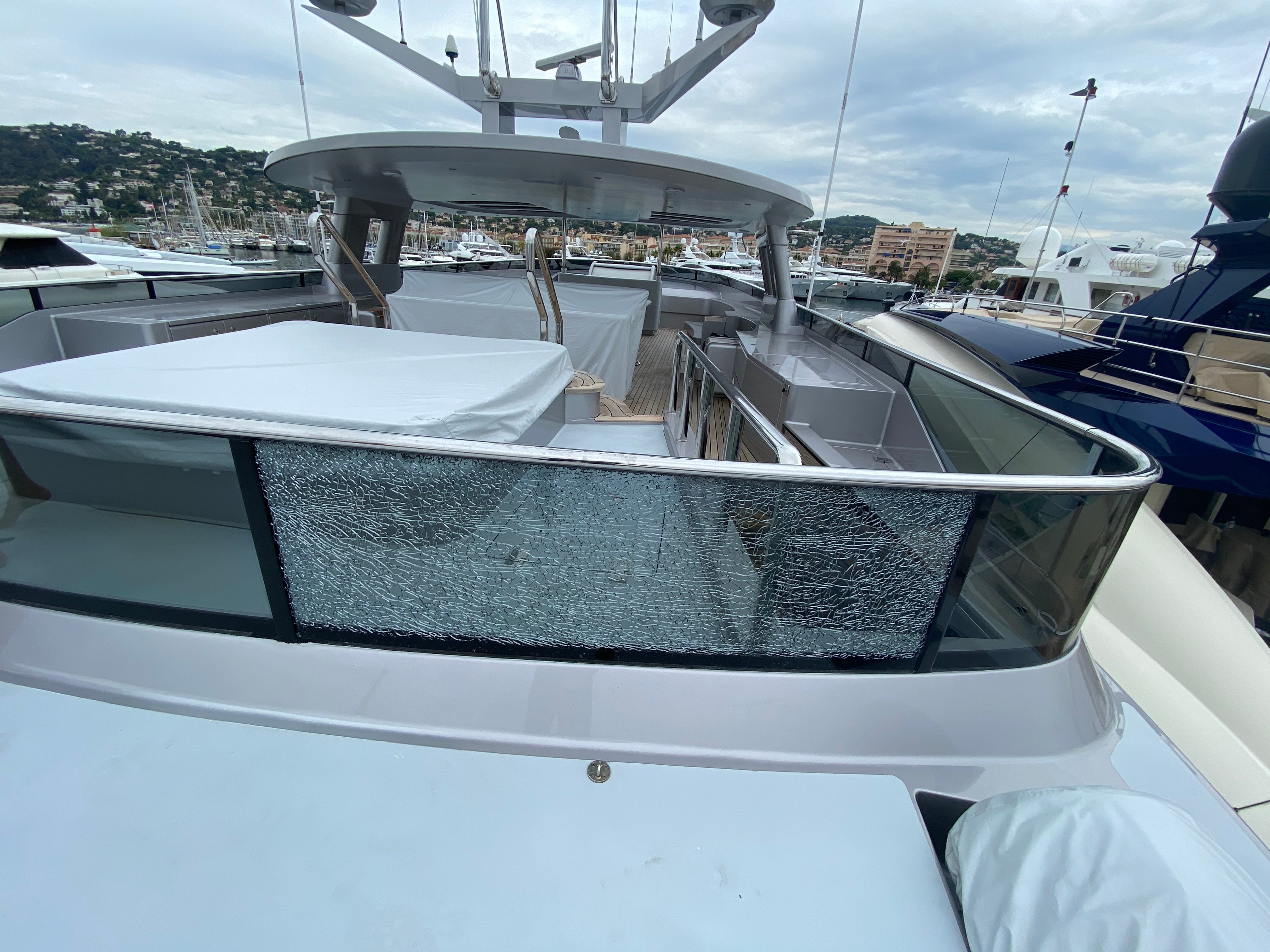
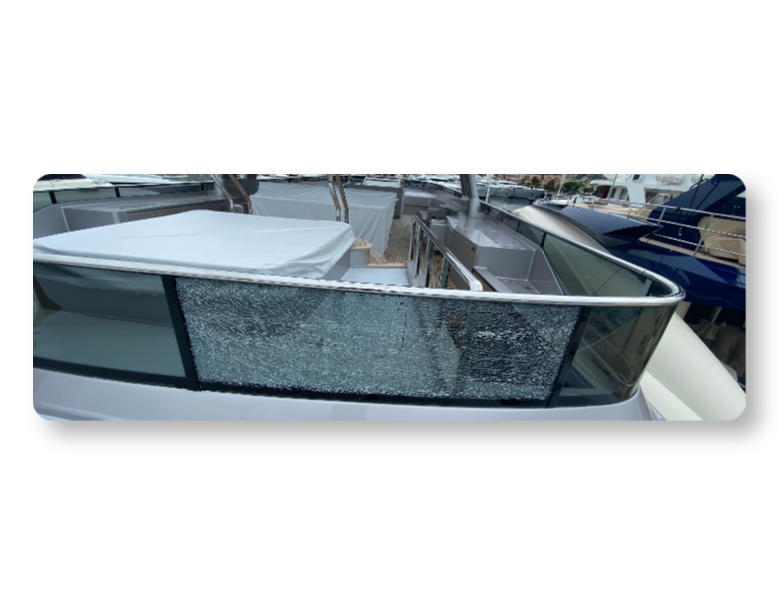
Shattered Glass Balustrade Panel

BEFORE

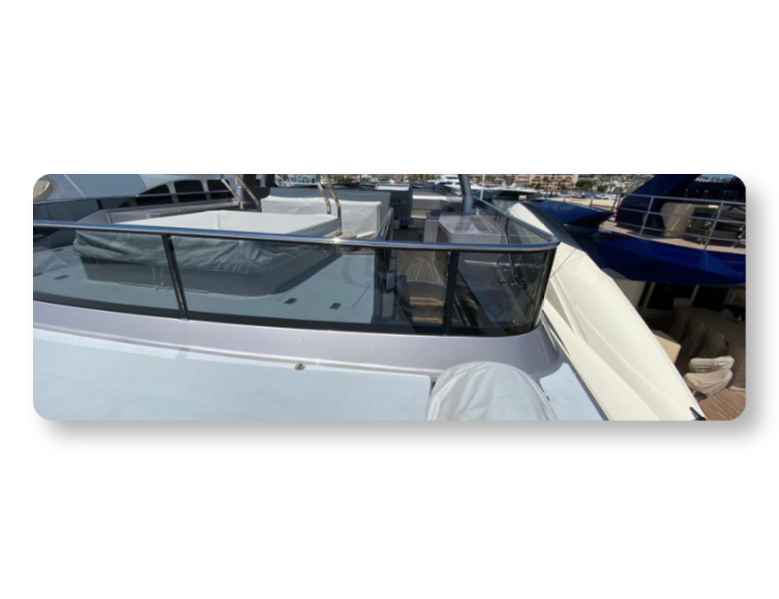
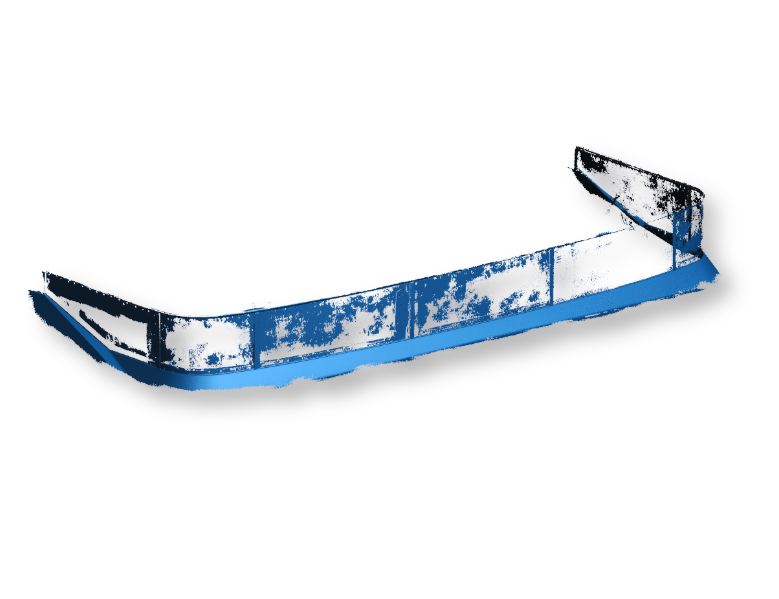
Failure of a single panel in a curved, segmented glass balustrade system - requiring a full set reproduction to guarantee consistency in tint -  with no margin for mismatch in geometry or appearance.

Design ohne Titel-17

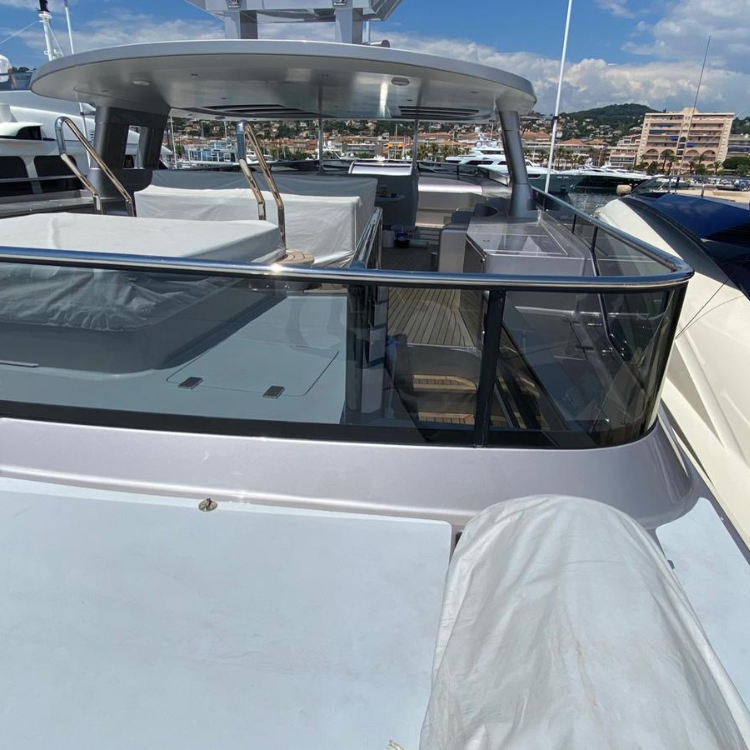
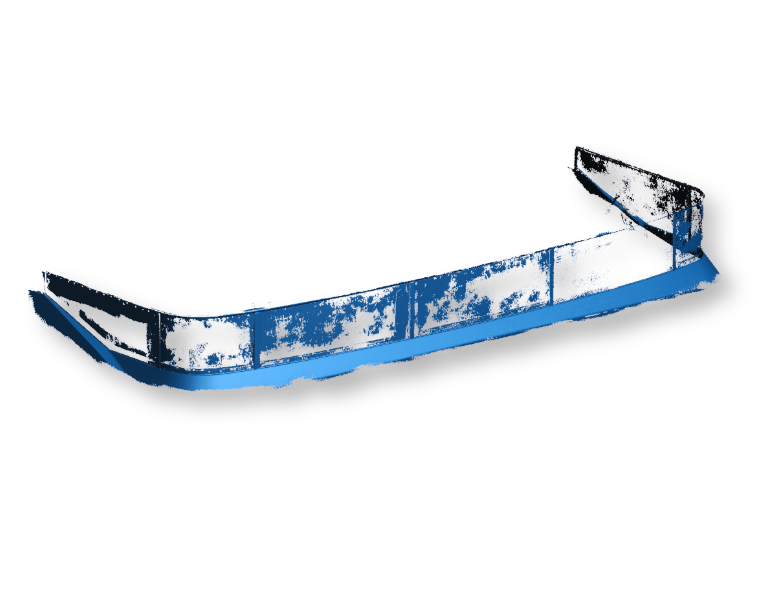
AFTER

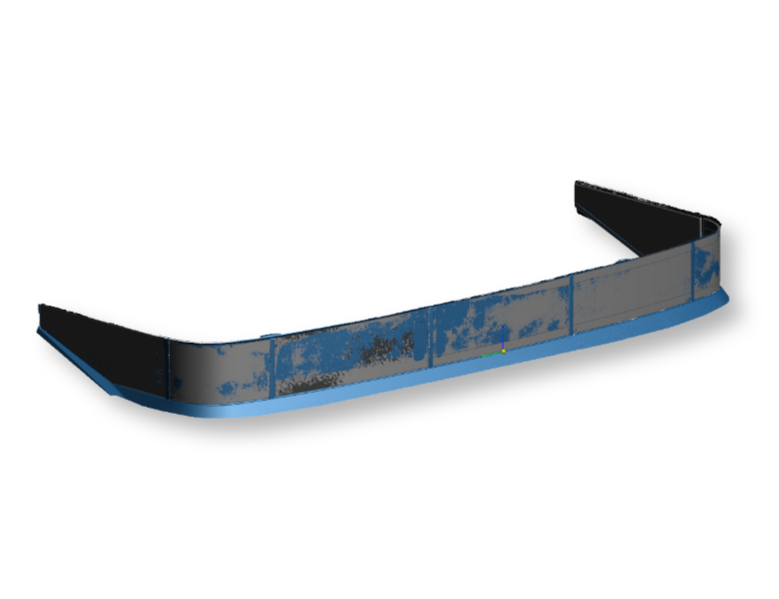
We captured the complex geometry of the entire system and translated it into production-ready CAD data that could be used by the glazing manufacturer.

Outcome: Perfect fit at first installation across all seven panels - no rework required, because risk for project delay was eliminated before production started.

How we work

5-1

1. Project Brief and On-Site Planning

Every project starts with understanding the specific situation: We review available drawings, images and the project context - including geometry, constraints, and installation conditions.
At the same time, we coordinate the on-site scan, defining location, timing, and access to ensure the real geometry can be captured accurately.

1-4

2. Capturing the Real Geometry Onsite

We capture the actual geometry of the existing structure using high-precision 3D scanning with accuracy down to 25 microns.
Compared to manual or point-based measurement methods, this approach is significantly faster while delivering up to five times more   accuracy across complex geometries. Because in refits, even small deviations determine whether glazing will fit at first installation or not.

3-Apr-30-2026-03-41-09-3483-PM

3. Reverse Engineer Scan Data to Production-Ready Data

A 3D scan captures shape - but not how a component must function, be manufactured or perform in use.

This is where Mapeex specialised reverse engineering processes becomes critical: This task requires more than recreating geometry. It involves understanding how a component works within its system, defining materials, interfaces and tolerances, and translating this into clear, production-ready data.

We deliver engineering data that reflects real geometry and real conditions, ensuring components fit correctly and perform reliably from the outset.

4-3

4. Manufacturing and Installation Support

We stay involved from production to installation. Our objective is simple: the glazing fits and installs correctly at first installation. If rework on the CAD data is still required, we take care of it - at our cost.


Why Point-Based Measurement Is Often Not Enough in Yacht Refits

Traditional measurement methods have long been used successfully in yacht refit projects. For simpler geometries and clearly defined interfaces, point-based or manual verification can still be sufficient.

Modern yacht design, however, introduces complex geometries, compound curvature and tightly integrated structural elements that significantly increase geometric sensitivity. Flush glazing, sculpted hull forms and tightly controlled interfaces leave minimal tolerance for approximation.

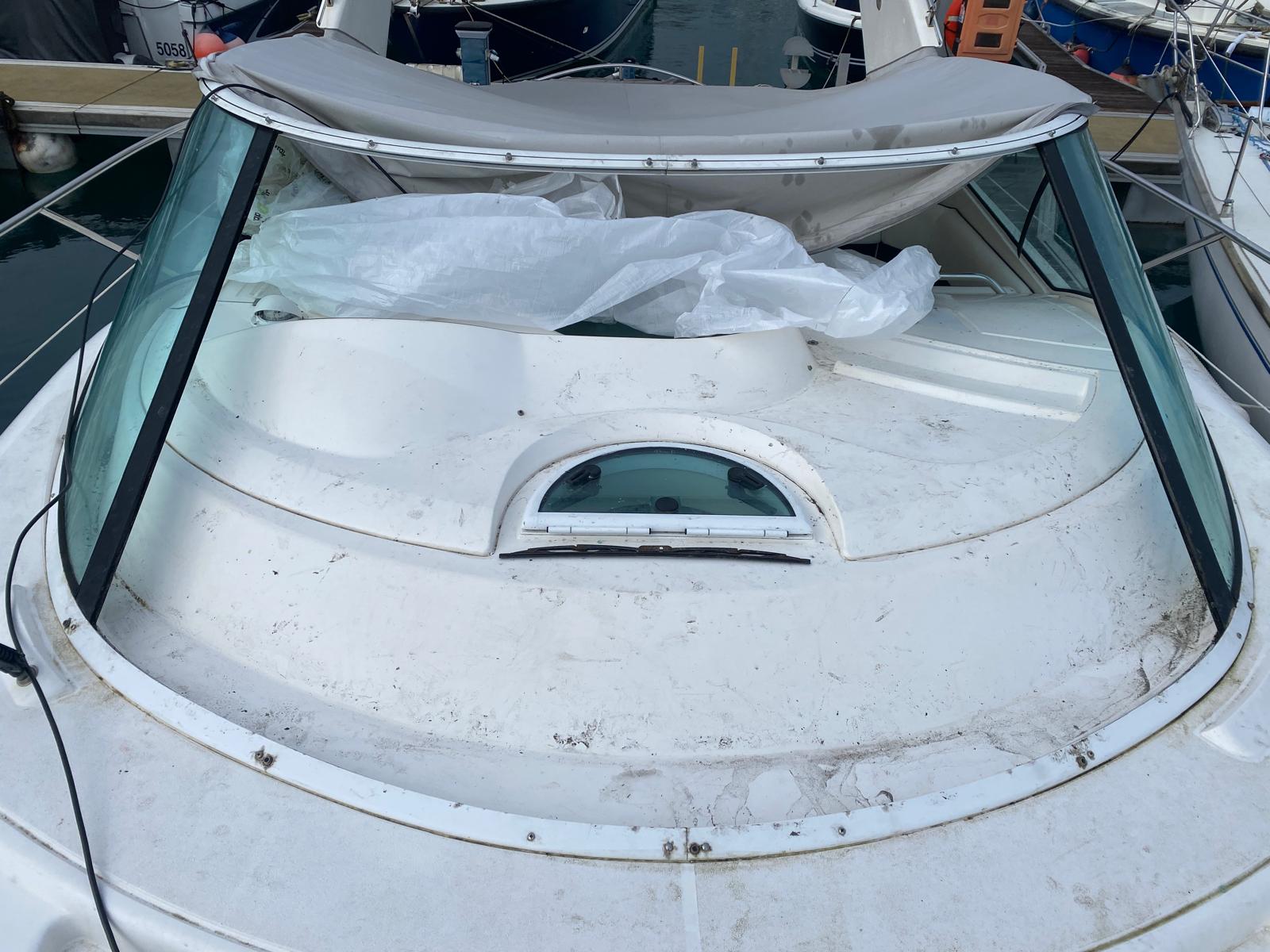
Yacht with damaged and missing windshield

In this environment, even minor deviations can lead to visible misalignment, sealing vulnerabilities or uneven load distribution. Beyond aesthetic impact, inaccurate reproduction can introduce long-term reliability risks. Marine components are exposed to vibration, dynamic loads, temperature variation and continuous environmental stress. If interfaces are not geometrically aligned with precision, performance degradation or structural fatigue may occur over time.

What was once considered “good enough” under simpler conditions can therefore become a source of rework, delay or long-term risk. Capturing and reproducing the full interface geometry with high accuracy is essential to protect both appearance and structural reliability in demanding marine environments.

Point-Based Measurement vs High-Precision 3D Scanning in Yacht Refits

  Point-Based Systems High-Precision 3D Scanning & Reverse Engineering
Data Capture Method Selective points, lines and reference paths ✅ Complete surface geometry capture
Surface Deviation Visibility Limited to measured areas ✅ Full-surface deviation analysis
Compound Curvature Interpreted between measured points ✅ Captured directly across entire interface
Distortion Detection Depends on measurement strategy ✅ Reveals asymmetry and structural movement
Tolerance Analysis Based on selected dimensions ✅ Evaluated across full geometry dataset
Reverse Engineering Basis Partial geometric reconstruction ✅ Dense, validated digital baseline
Fabrication Risk Higher interpretation dependency ✅ Reduced ambiguity before production

Suitability

Simple planar or low-risk parts ✅ Complex, high-value, schedule-critical replacements


Point-based measurement remains a practical solution for straightforward components with limited geometric complexity.

In yacht refit and component replacement projects involving curved glazing, structural interfaces or load-sensitive assemblies, full-surface geometry capture provides a more reliable basis for reverse engineering and fabrication. The difference is not technological preference - it is risk management under refit conditions.

Yacht Refit Support Grounded in Performance-Grade Engineering

Mapeex Marine´s Engineering Methodology is rooted in performance-critical environments where deviation directly affects reliability and load behaviour. The same discipline developed in world championship-level motorsport programs now underpins Mapeex Marine´s Yacht Refit Support - from curved glazing replacement to structural component reconstruction.

400+
Yacht Glazing Installations completed
400+
Undocumented or discontinued components reconstructed
75+
International high-stakes engineering projects delivered

Are you planning a Yacht Component Replacement, Structural Modification or Interior Refit?

In a superyacht refit, geometric accuracy directly influences installation reliability, yard time and release scheduling. When curvature, structural interfaces or deck levels are involved, assumptions quickly translate into delay. Early geometric verification reduces iteration, protects fabrication timelines and lowers the risk of missed delivery or charter windows. All inquiries will be handles confidential.

Case Studies

When the Windscreen is gone

When the Windscreen is gone

How Mapeex restored a Fairline Targa 40 to Perfect Condition at first Installation.

Frequently asked questions

I am a Refit Project Manager - can I deal with you directly?

High-precision 3D scanning creates a complete digital model of the actual on-board situation - not just a few measured points, but the entire surface of the opening or structure. The accuracy is within millimetres.

For a refit project manager, this means one thing: you know exactly what you are building against before fabrication starts.

In projects such as curved yacht glazing replacement, structural modifications or modified openings, the existing geometry on board rarely matches original drawings perfectly. Hull structures may have shifted slightly over time. Openings may not be perfectly symmetrical. Surfaces may not be perfectly flat.

If this deviation is not detected early, the new part may require adjustment during installation. That leads to delays, additional yard time and coordination issues between trades.

A full-surface scan identifies these deviations before production begins. The digital model shows where geometry differs from nominal dimensions, allowing the replacement part to be manufactured to match the real installation condition.

In practical terms: fewer trial fits, fewer surprises during installation and a lower risk of schedule overrun.

Can you reproduce a yacht component without original drawings?

Yes. For obsolete or undocumented yacht parts, we capture the real on-board geometry and reconstruct a validated digital model suitable for fabrication. The resulting CAD data reflects the actual installation condition, not nominal assumptions.

Can you work on board during an active refit?

Yes. On-board geometry capture is typically performed within the existing yard schedule. The process is structured to minimise disruption while delivering fabrication-ready data early in the timeline.

How does this reduce refit delays?

By replacing iterative mock-ups and trial fitting with validated digital geometry before production begins. This reduces rework, protects yard time and lowers the risk of missing delivery or charter windows.

How long does it take from geometry capture to data delivery?

The on-board capture itself is typically completed within one to two days, depending on scope, accessibility and weather conditions. Data processing and reverse engineering follow immediately after. We usually deliver fabrication-ready CAD data within 3-5 working days to protect your refit schedule. 24-hours Express Delivery is also possible for additional charge.

Do you work on-site in the shipyard?

Yes. For most yacht component replacement and glazing projects, on-board capture is essential. The scanning process is structured to integrate into the yard schedule with minimal disruption to parallel trades.

What kind of data do you deliver to suppliers?

You receive a full set of validated, production-ready deliverables provided in standard industry formats (STP, PDF, DXF , 3dm/Rhino Format) for  immediate use by marine manufacturers and suppliers:

  • Validated CAD Models in standard industry formats
  • Production Drawings
  • Interface & Curvature Validation
  • Manufacturing Documentation
  • Quality Control References
  • Production Supervision (optional)

Where required, we coordinate directly with your chosen producers or engage our established specialist supplier network to ensure controlled fabrication and quality alignment.

Is this only relevant for glazing replacement?

No. While curved yacht glazing is a common application, the same geometric principles apply to structural modifications, equipment foundations, altered openings, system integrations.

Why is geometric verification important when installing new decks or flooring during a refit?

During interior refits, new deck structures or flooring systems are often installed onto existing surfaces that are no longer perfectly level or symmetrical. Small deviations in deck height, slope or flatness can affect door alignment, bulkhead interfaces and glazing transitions.

Without accurate geometric verification, these deviations are typically corrected during installation through adjustment and rework. Establishing a precise digital baseline early in the process helps prevent cumulative tolerances and protects the refit cost and schedule.

What size of component can you scan ?

From 20 mm to over 1 meter for mechanical components, and up to 17 meters and beyond for glazing and large‑scale parts.

Read the latest Blog Posts