
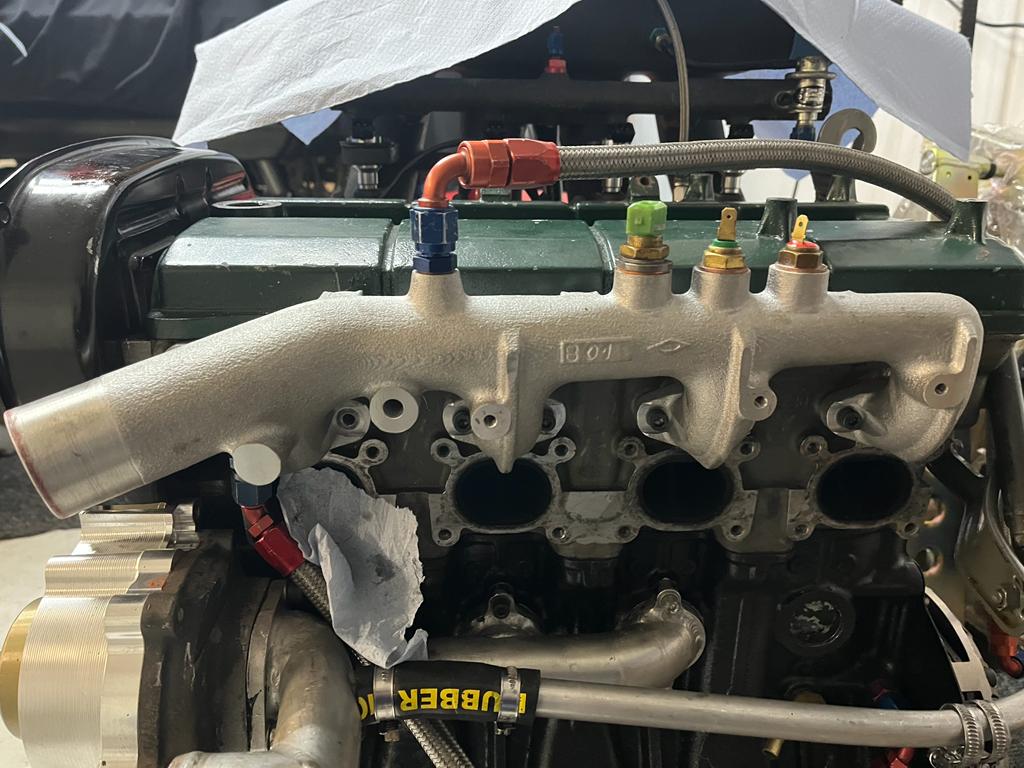
"Without this water manifold, the engine cannot run."
// CASE STUDY
When Time corrodes the irreplaceable
How Mapeex reproduced a Toyota 222D water manifold - preserving the legacy of one of four cars left in existence
The Challenge
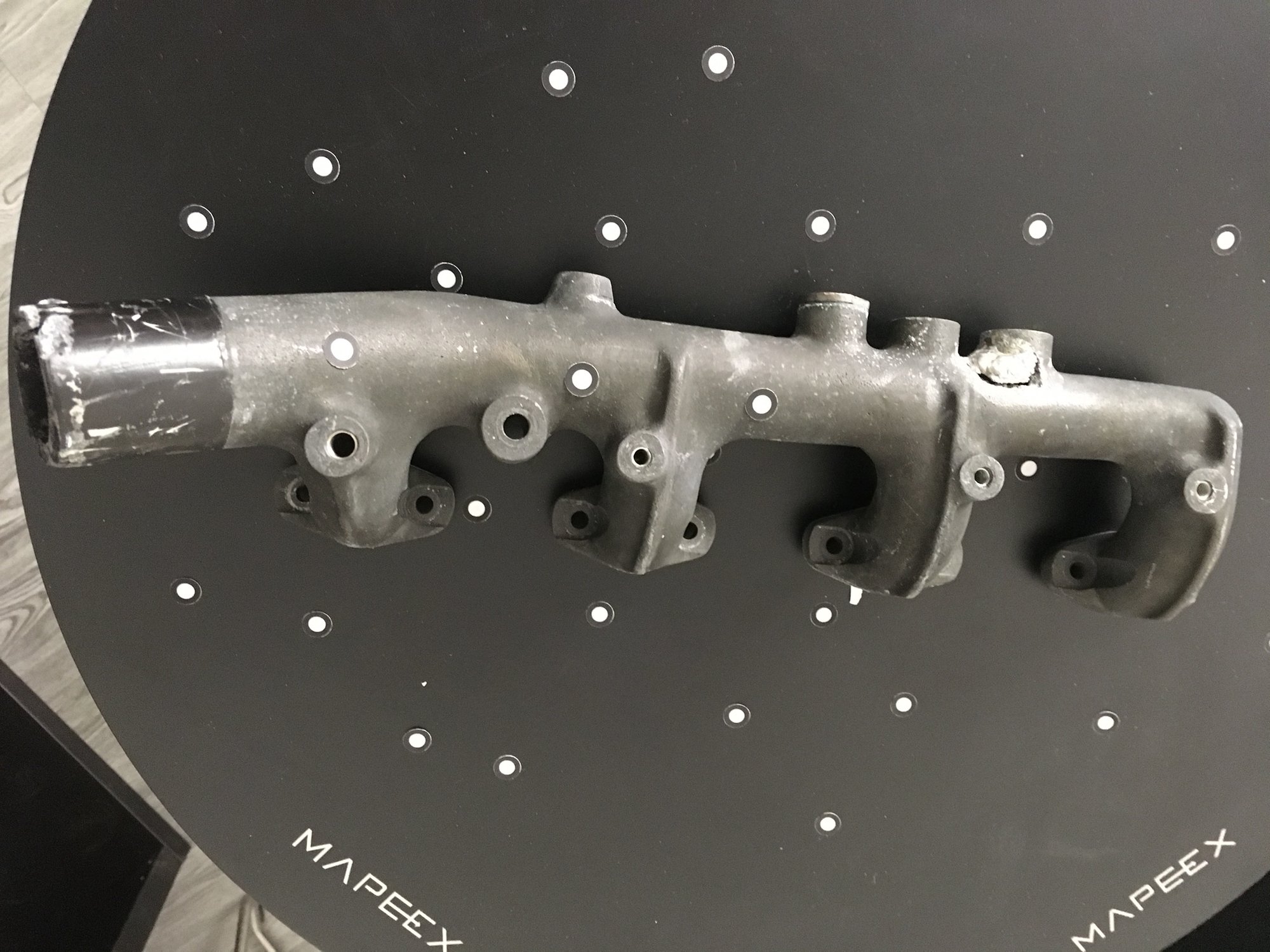
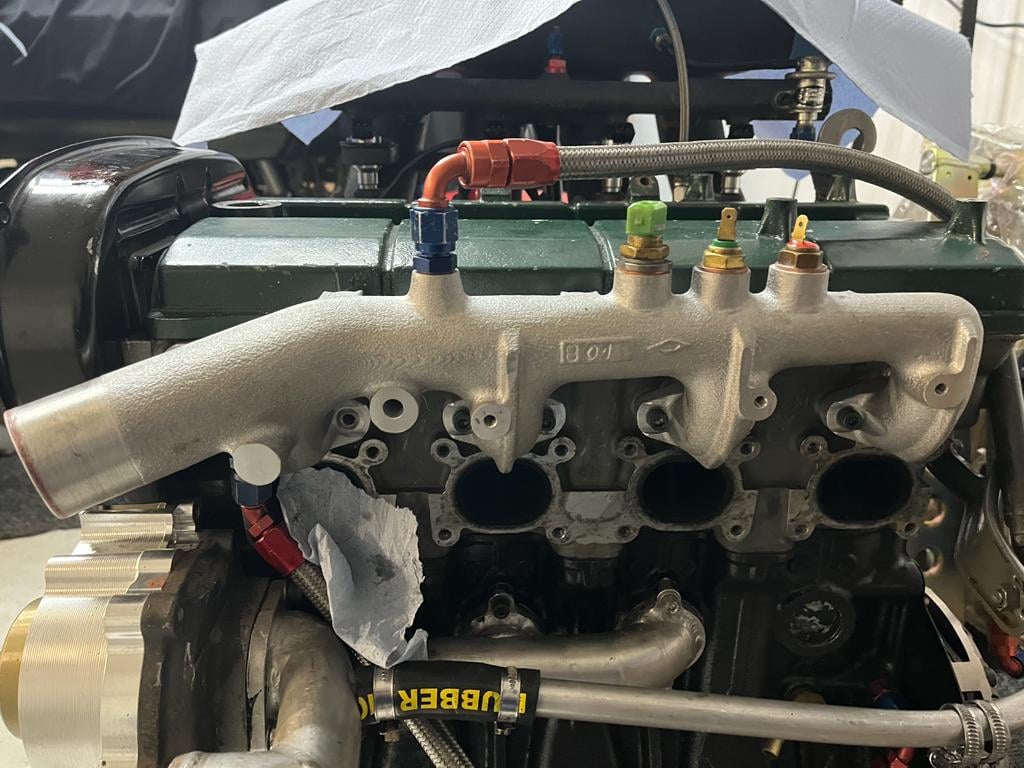
A private collector approached Mapeex with a request as rare as the vehicle itself: a Toyota 222D - the only one in tarmac-specification Group B rally cars out of four remaining in the world - needed a critical engine component reproduced from scratch.
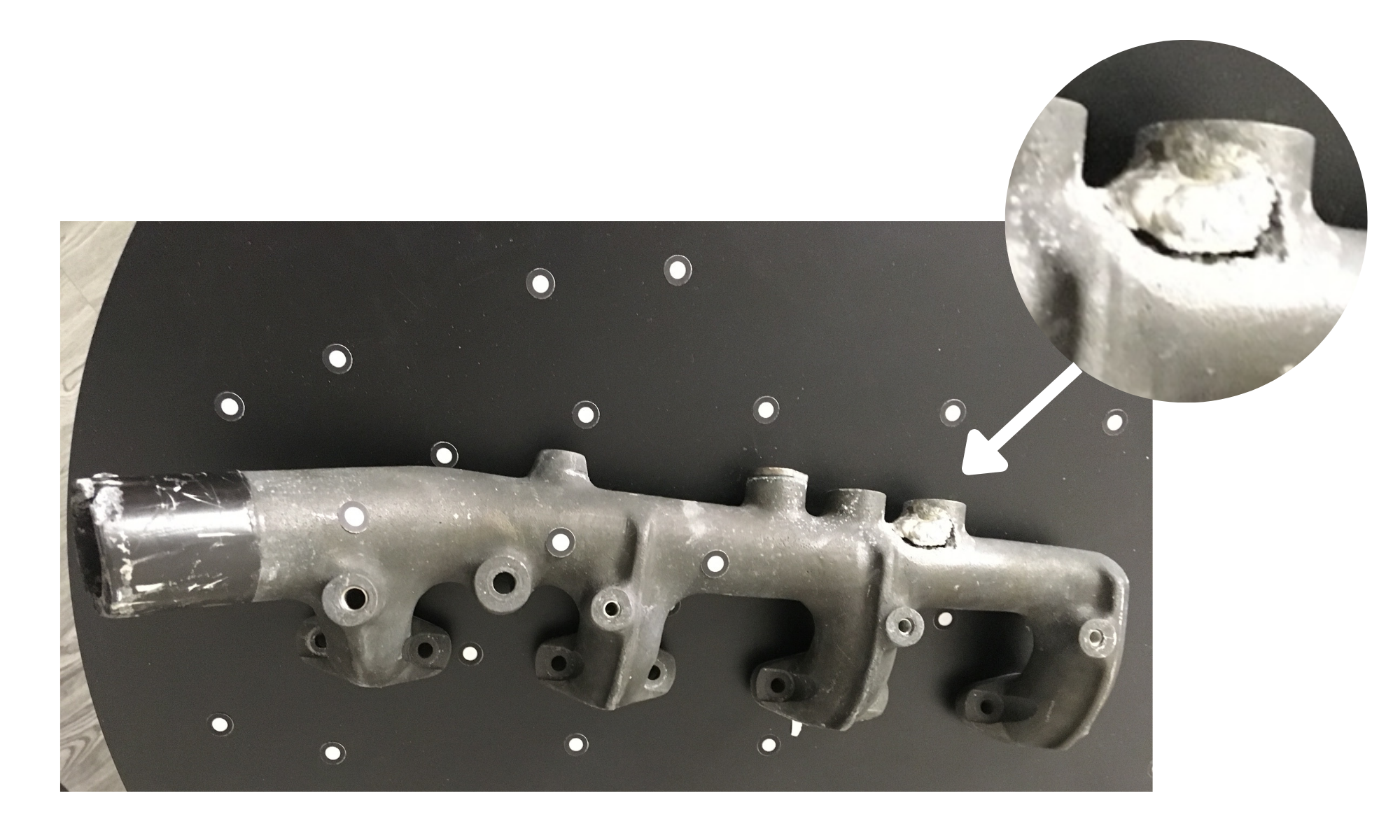
The part in question was the engine water manifold, originally cast in magnesium. Chosen in the 1980s for its low density and thermal compatibility with the engine's operating temperature range, magnesium has one significant drawback: it corrodes. After four decades, the manifold had deteriorated beyond any possibility of repair.
What made this case uniquely demanding was the complete absence of any production data. No technical drawings. No spare parts. No digital model. The only reference available was the corroded original - damaged, fragile, and irreplaceable. Without an accurate reproduction of its exact geometry, the engine could not run. And without the engine, the car's legacy - and its future on track - was at risk.
The constraints were unambiguous:
- No spare part available
- No original production data or technical drawing
- The sole reference item was corroded beyond repair
- Exact geometric reproduction required - no adjustments permitted on assembly
The Approach
1 · Assessment
As with every project, Mapeex began with a careful inspection of the damaged component -evaluating the extent of corrosion and preparing the part for the reverse engineering process. The condition of the reference item directly determines the quality of what can be captured; every surface and interface was treated with corresponding care.
2 · Engineering
The manifold's critical interfaces - its mounting faces to the engine, sensor pick-up points, and cooling pipe connections - were methodically prepared for scanning. To capture the internal geometry of the cooling passages, a bespoke silicone print was produced, allowing the complete internal and external form of the component to be recorded in high-precision 3D scan data.
3 · Material Selection
Given the known limitations of the original magnesium alloy, the material specification was updated to aluminium - offering equivalent performance within the engine's thermal operating range, with significantly greater long-term durability and resistance to corrosion. This was not a default substitution, but an informed engineering decision based on the operating conditions of the application.
4 · Production & Validation
Before committing to production, a scan-to-CAD overlay confirmed the geometric integrity of the reverse-engineered model. The part was then cast using a 3D-printed moulding technique in partnership with a specialist casting supplier. Following machining, a flow test was conducted to validate that engine cooling performance would be optimal. Final confirmation came on track: the car regained full performance and functionality - and gained reliability in the process.
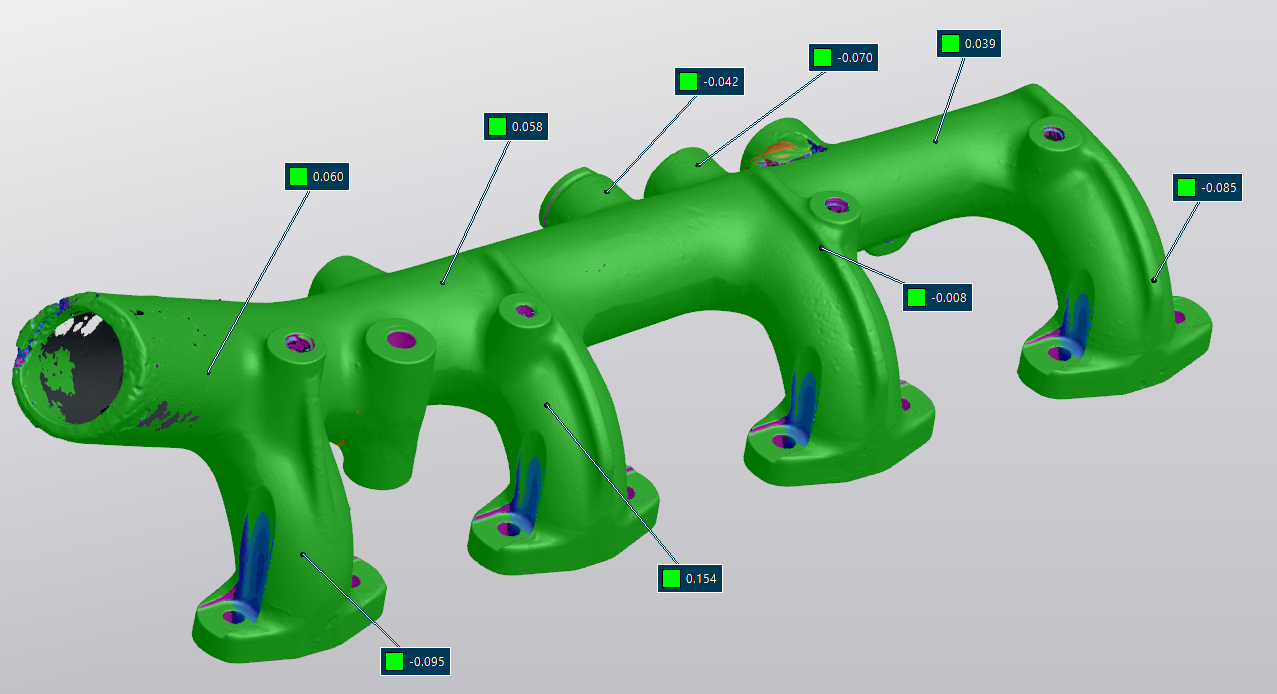
"Unlike a standard engineering bureau, Mapeex mapped all operating conditions and environmental factors before selecting materials - ensuring the part performs reliably over time, not just fits on day one."
The Result
Five weeks from the start of reverse engineering, the replacement manifold was ready. It was installed without a single adjustment - to the part itself, or to any connected component.First Time Right
Zero adjustments required on installation
On Time
One week reverse engineering, four weeks production
Long Terminal Reliability
Parts engineered to last as long as the car is maintained
Legacy preserved
The 222D returned to track in full original specification.
The collector received his car back as it should be - with a water manifold that is a 100% geometric replica of the original, now built to last.
Why Mapeex? Key Differentiators in this case
First Time Right - Every Time
Every part is engineered with production documentation precise enough to guarantee fit on first installation. The scan-to-CAD validation process removes geometric risk before a single component is cast.
Full Context Engineering
Mapeex does not simply reverse-engineer a shape. The team analyses operating conditions, thermal loads, and environmental factors - then selects the optimal material for reliable, long-term performance.
30 Years of Motorsport Precision
Mapeex's methodology was forged in an environment where parts must perform under extreme conditions, to tight deadlines, with zero margin for error. Every client benefits from that standard.
Established Quality Control Processes
Mapeex does not manufacture in isolation - production is directed through a curated network of specialist suppliers, with quality supervised at every stage.
Have a similar Project? Tell us about it!